Updated: April 11, 2026
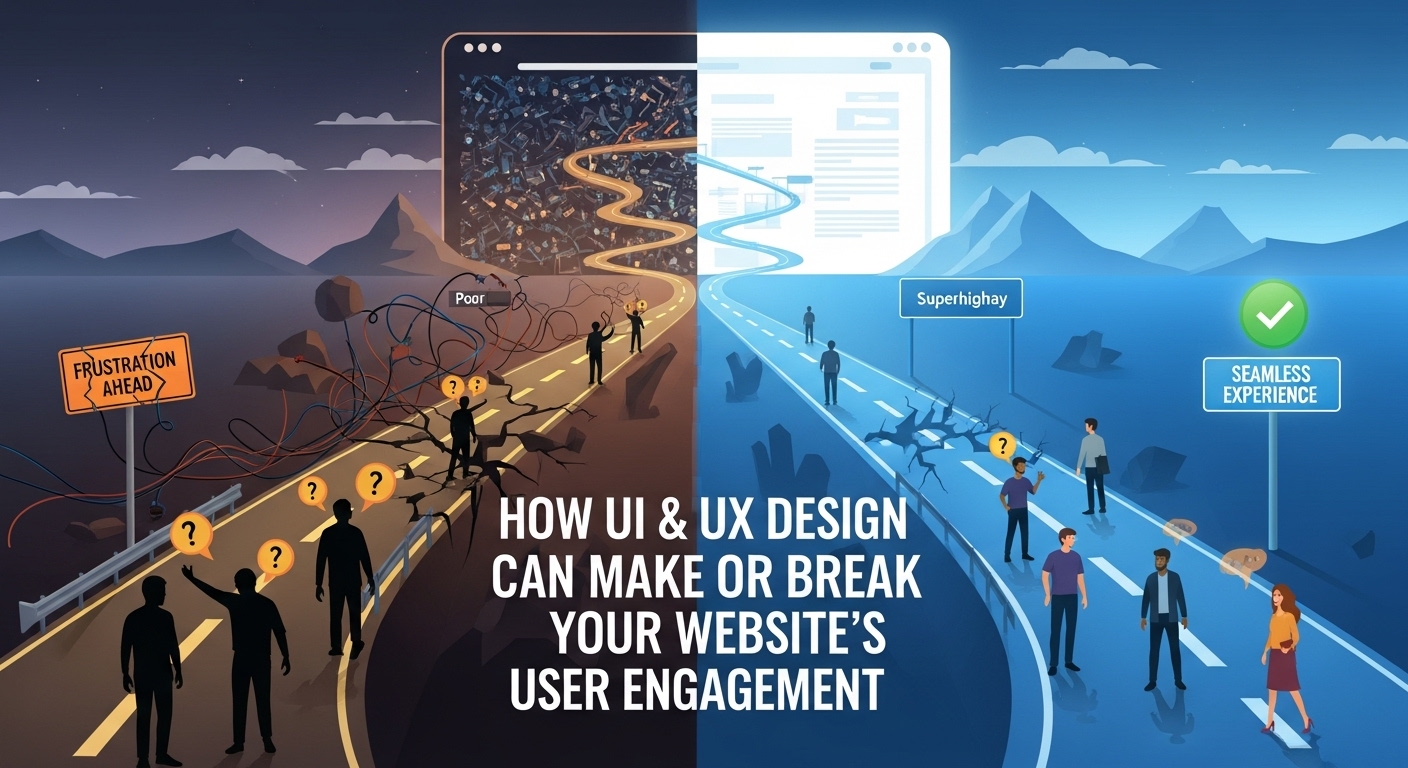
How UI & UX Design Can Make or Break Your Website’s User Engagement
In the digital age, where first impressions are often made within seconds, the design of your website plays a crucial role in determining whether users engage with your content or bounce off to a competitor. The concepts of User Interface (UI) and User Experience (UX) design are at the heart of creating a website that not only attracts but retains user attention. This post explores the intricate relationship between UI & UX design and user engagement, providing insights into how effective design can significantly impact your website’s success.
The Fundamentals of UI & UX Design
Before delving into how UI & UX design influences user engagement, it’s essential to understand what these terms mean. User Interface (UI) design refers to the visual elements of a website, including buttons, icons, spacing, typography, color schemes, and responsive design. It’s all about the look and feel of the website.
On the other hand, User Experience (UX) design focuses on the overall experience a user has while interacting with a website. It encompasses the website’s structure, content, and navigation, ensuring that users can find what they need quickly and easily. Together, UI and UX design create a cohesive digital environment that can either captivate or repel users.
Improving User Engagement through UI Design

Visual appeal is one of the first aspects users notice when they land on a website. An aesthetically pleasing interface can make users more likely to stay and explore. Here’s how effective UI design can enhance user engagement:
- Consistency: Maintaining consistent design elements across your website helps users navigate more intuitively. When buttons, colors, and fonts follow a uniform pattern, users feel more comfortable and confident in their interactions.
- Responsiveness: In an era where mobile devices account for a significant portion of web traffic, responsive design is crucial. A responsive UI adapts seamlessly to different screen sizes, ensuring a smooth user experience across all devices.
- Intuitive Navigation: A well-structured UI with intuitive navigation elements can drastically reduce bounce rates. Users should be able to find information with minimal effort. Implementing a clear menu structure and breadcrumb trails can significantly enhance user engagement.
For an in-depth exploration of UI design principles, consider resources like the InVision Design Blog, which offers comprehensive insights into creating user-friendly interfaces.
Enhancing UX for Better User Engagement
While UI design captures attention, UX design keeps users engaged. A well-thought-out UX design addresses user needs and pain points, ensuring a seamless and enjoyable experience. Here are some key UX strategies to boost engagement:
- User-Centered Design: Understanding your audience is pivotal in UX design. Conduct user research to identify their needs, preferences, and behaviors. This data-driven approach allows you to tailor your website to meet user expectations effectively.
- Accessible Content: Ensuring that content is accessible and easy to read enhances user engagement. Use clear and concise language, and structure content with headings and bullet points to improve readability.
- Effective Call-to-Actions (CTAs): CTAs guide users towards desired actions, such as signing up for a newsletter or making a purchase. Strategic placement and compelling language in CTAs can significantly improve conversion rates.
- Feedback Mechanisms: Allow users to provide feedback on their experience. This not only makes users feel valued but also provides insights for continuous improvement of the website’s UX.
For more on UX strategies, the Nielsen Norman Group’s guide on UX research offers valuable information on creating user-centered designs.
The Interplay Between UI and UX Design
While UI and UX design are distinct concepts, their synergy is what ultimately shapes user engagement. A visually stunning UI can attract visitors, but without a solid UX, users may leave feeling frustrated and dissatisfied. Conversely, a great UX can be undermined by a poorly designed UI.
To achieve a balance, designers must integrate UI and UX elements seamlessly. This involves collaboration between designers, developers, and stakeholders to ensure that both the aesthetic and functional aspects of the website align with the brand’s goals and user expectations.
One popular tool for achieving this balance is the use of Adobe XD, which allows for prototyping and testing of design concepts before implementation, ensuring a harmonious user experience.
Common Pitfalls in UI & UX Design
Even experienced designers can fall into traps that negatively impact user engagement. Here are some common pitfalls to avoid:
- Overloading with Features: While it’s tempting to include numerous features, this can overwhelm users. Focus on essential functionalities that align with user goals.
- Ignoring User Feedback: User feedback is a goldmine for improvement. Ignoring it can lead to a disconnect between what users want and what the website offers.
- Poorly Optimized Performance: Slow loading times and performance issues can frustrate users. Optimize images, leverage browser caching, and consider using a Content Delivery Network (CDN) to enhance performance.
- Lack of Testing: Regular testing identifies usability issues before they become significant problems. Conduct A/B testing and usability tests to refine both UI and UX elements continually.
For more strategies on enhancing web performance, the Web.dev guide offers a comprehensive overview of best practices for optimizing website speed.
Takeaways
The relationship between UI & UX design and user engagement is undeniable. A well-designed interface can attract users, while a carefully crafted user experience can keep them engaged and satisfied. By understanding and implementing effective UI and UX strategies, businesses can create websites that not only meet but exceed user expectations.
In the competitive digital landscape, investing in UI and UX design is no longer optional; it’s a necessity. By focusing on creating a harmonious blend of aesthetics and functionality, you can ensure that your website not only stands out but also delivers a user experience that fosters loyalty and boosts engagement.
Future Trends in UI & UX Design
As technology evolves, so too do the trends in UI and UX design. Staying ahead of these trends can give your website a competitive edge. Here are some emerging trends to watch out for:
- Voice User Interface (VUI): With the rise of voice-activated devices like Amazon Alexa and Google Assistant, integrating voice functionality into websites is becoming increasingly popular. This provides a hands-free way for users to interact with your website, enhancing accessibility and convenience.
- Augmented Reality (AR): AR technology is making its way into web design, offering immersive experiences that can engage users in new and exciting ways. For example, furniture retailers can use AR to show how a piece might look in a customer’s home.
- Minimalist Design: Users are increasingly drawn to clean, minimalist designs that prioritize usability. This trend focuses on decluttering interfaces and streamlining navigation to improve user experience.
- Dark Mode: Offering a dark mode option is becoming standard practice. Dark mode not only reduces eye strain in low-light conditions but also adds an aesthetic appeal that many users prefer.
To stay updated on the latest trends, resources like the Smashing Magazine provide insights and inspiration for UI and UX design professionals.
The Role of Analytics in UI & UX Design
Analytics play a crucial role in refining UI and UX design. By analyzing user behavior, designers can gain valuable insights into how users interact with a website and identify areas for improvement. Here are key analytics tools and techniques:
- Heatmaps: Heatmaps provide a visual representation of user interactions, showing where users click, scroll, and spend the most time. This data can help designers optimize layout and navigation.
- User Flow Analysis: Understanding the pathways users take through your website can highlight potential bottlenecks or points of confusion. By streamlining these flows, you can enhance user experience.
- A/B Testing: A/B testing allows designers to compare different versions of a webpage to see which performs better. This data-driven approach can inform decisions about design changes.
For a deeper dive into utilizing web analytics, check out the Google Analytics platform, which offers robust tools for tracking and analyzing web traffic.
Case Studies: Successful UI & UX Design Implementations
Examining real-world examples can provide valuable insights into the impact of effective UI and UX design. Here are a few noteworthy case studies:
- Airbnb: Airbnb’s success is largely attributed to its intuitive design, which prioritizes user experience. The platform’s simple search functionality and clear booking process have set a standard in the travel industry.
- Spotify: Known for its user-friendly interface, Spotify’s design allows users to easily navigate through vast music libraries. Features like personalized playlists and seamless integration across devices enhance user engagement.
- Slack: Slack’s clean and minimalist design enhances productivity and user interaction. Its intuitive interface and customizable notifications keep users engaged and connected.
These examples underscore the importance of investing in UI and UX design to create platforms that resonate with users and meet their needs effectively.
Final Thoughts
In conclusion, UI and UX design are pivotal to the success of any website. They not only affect how users perceive a website but also influence their engagement and interaction with it. By focusing on creating a cohesive and intuitive design, businesses can significantly improve user satisfaction and achieve their digital objectives.
As we look to the future, staying informed about emerging trends and leveraging analytics will be key to maintaining a competitive edge in the digital landscape. By prioritizing user-centered design and continuously refining the user experience, you can ensure that your website not only attracts visitors but also converts them into loyal users.