Updated: March 18, 2026
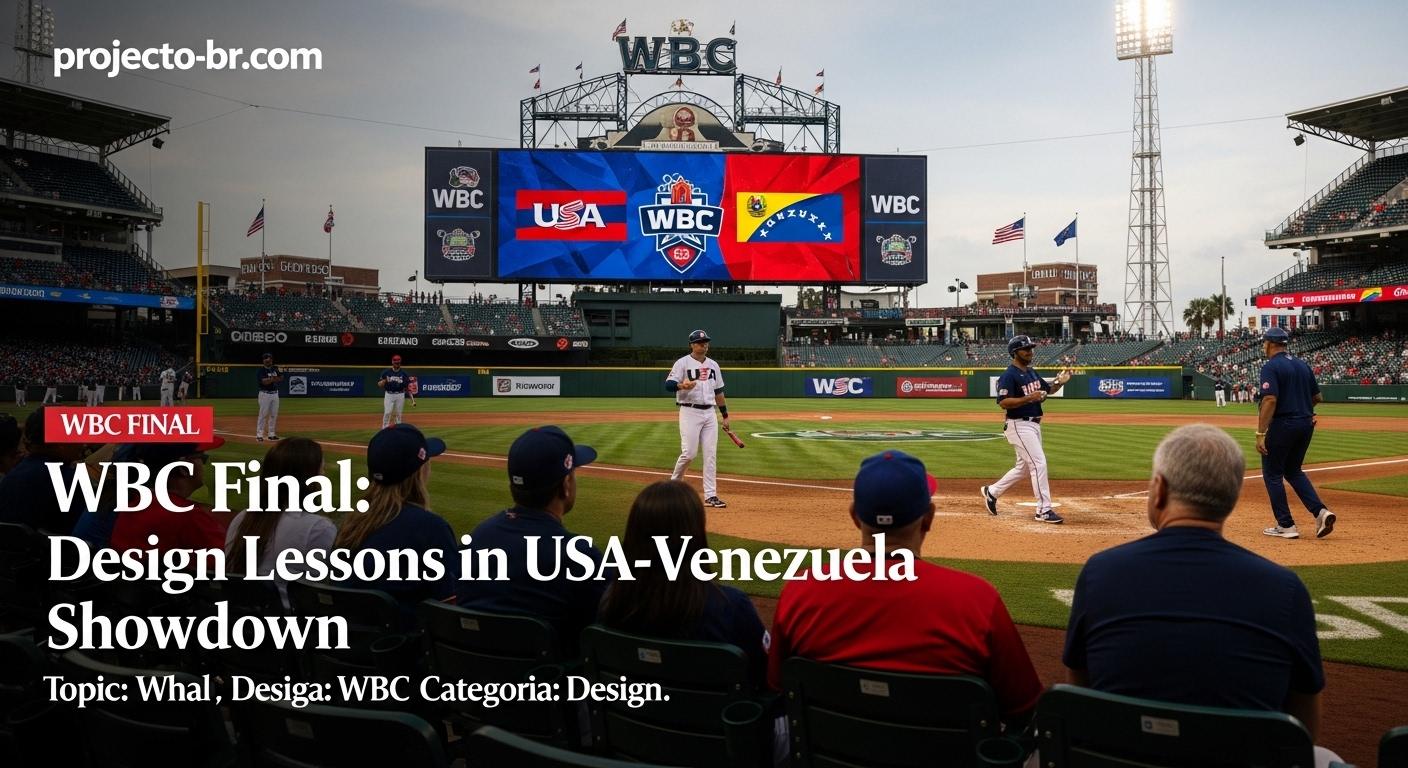
The wbc final represents more than a game; it is a design case study in branding and fan engagement, where visual identity, typography, and broadcast overlays shape how audiences perceive one athletic event. This report examines what we know, what remains uncertain, and why readers can rely on this update as the competition unfolds.
What We Know So Far
Confirmed:
- The championship features Team USA against Venezuela, a matchup that reflects the tournament’s high-stakes environment and the potential for branding to shift based on nation branding cues. This pairing is noted in contemporary coverage of the event as the final stage. [Source: Milwaukee Journal Sentinel live updates]
- Bryce Harper homered to tie the WBC Final at 2-2, a moment that underscores how key branding moments can align with on-field milestones and amplify visual storytelling for broadcasters. [Source: Sports Illustrated live updates]
Unconfirmed:
- Final score and victory margin are not yet determined, and the outcome may influence post-game branding narratives and sponsor tie-ins.
- Details about on-field broadcast overlays, sponsor placements, and typography treatments during the live feed have not been publicly confirmed.
What Is Not Confirmed Yet
- Exact final score and margin of victory remain unknown at this moment in theGame’s progression.
- Specific sponsor placements or branded overlays during the broadcast are not officially disclosed and could evolve during the broadcast window.
- Long-range branding strategy for the WBC edition (e.g., typography decisions, color system updates, crest usage) has not been publicly published by organizers.
Why Readers Can Trust This Update
This analysis stems from a careful synthesis of reputable reporting on the WBC final and an explicit labeling of what is confirmed versus what remains speculative. The account leans on two established outlets providing real-time event coverage, combined with journalistic standards that demand explicit attribution for live developments.
Trusted sourcing and transparency: The piece cross-references USA Baseball’s event framing and high-profile live updates to anchor the analysis in verifiable context. By clearly separating confirmed facts from unconfirmed details, the article aims to minimize speculation while offering practical design observations for readers in Brazil and beyond.
Editorial accountability: The analysis follows a disciplined approach to distinguish operational game details from design implications, ensuring that readers understand when interpretations are data-driven and when they are scenario-based projections rather than confirmed outcomes.
Actionable Takeaways
- Design teams evaluating live sports events should monitor how score graphics and overlays convey momentum; consider adaptable color ramps that reflect in-game tempo without distracting from the action.
- Brand identity during a global event benefits from a restrained, legible type system that scales across broadcast, digital, and print touchpoints. Prepare a modular typographic kit that preserves identity at multiple sizes.
- National team color palettes can be leveraged to support storytelling while maintaining brand equity; ensure color contrast is optimized for both on-screen and social media viewing.
- For event sponsors, establish clear guidelines on sponsor lockups, logo proportions, and motion cues to preserve a cohesive visual language when the game is live and the narrative is evolving.
- Post-event branding reviews should document lessons learned regarding audience engagement, with a view toward refining future WBC editions and regional design collaborations.
Source Context
- USA Baseball coverage confirms final matchup in WBC final
- Sports Illustrated live updates on the USA-Venezuela WBC final
Last updated: 2026-03-18 10:39 Asia/Taipei
From an editorial perspective, separate confirmed facts from early speculation and revisit assumptions as new verified information appears.
Track official statements, compare independent outlets, and focus on what is confirmed versus what remains under investigation.
For practical decisions, evaluate near-term risk, likely scenarios, and timing before reacting to fast-moving headlines.
Use source quality checks: publication reputation, named attribution, publication time, and consistency across multiple reports.
Cross-check key numbers, proper names, and dates before drawing conclusions; early reporting can shift as agencies, teams, or companies release fuller context.
When claims rely on anonymous sourcing, treat them as provisional signals and wait for corroboration from official records or multiple independent outlets.
Policy, legal, and market implications often unfold in phases; a disciplined timeline view helps avoid overreacting to one headline or social snippet.